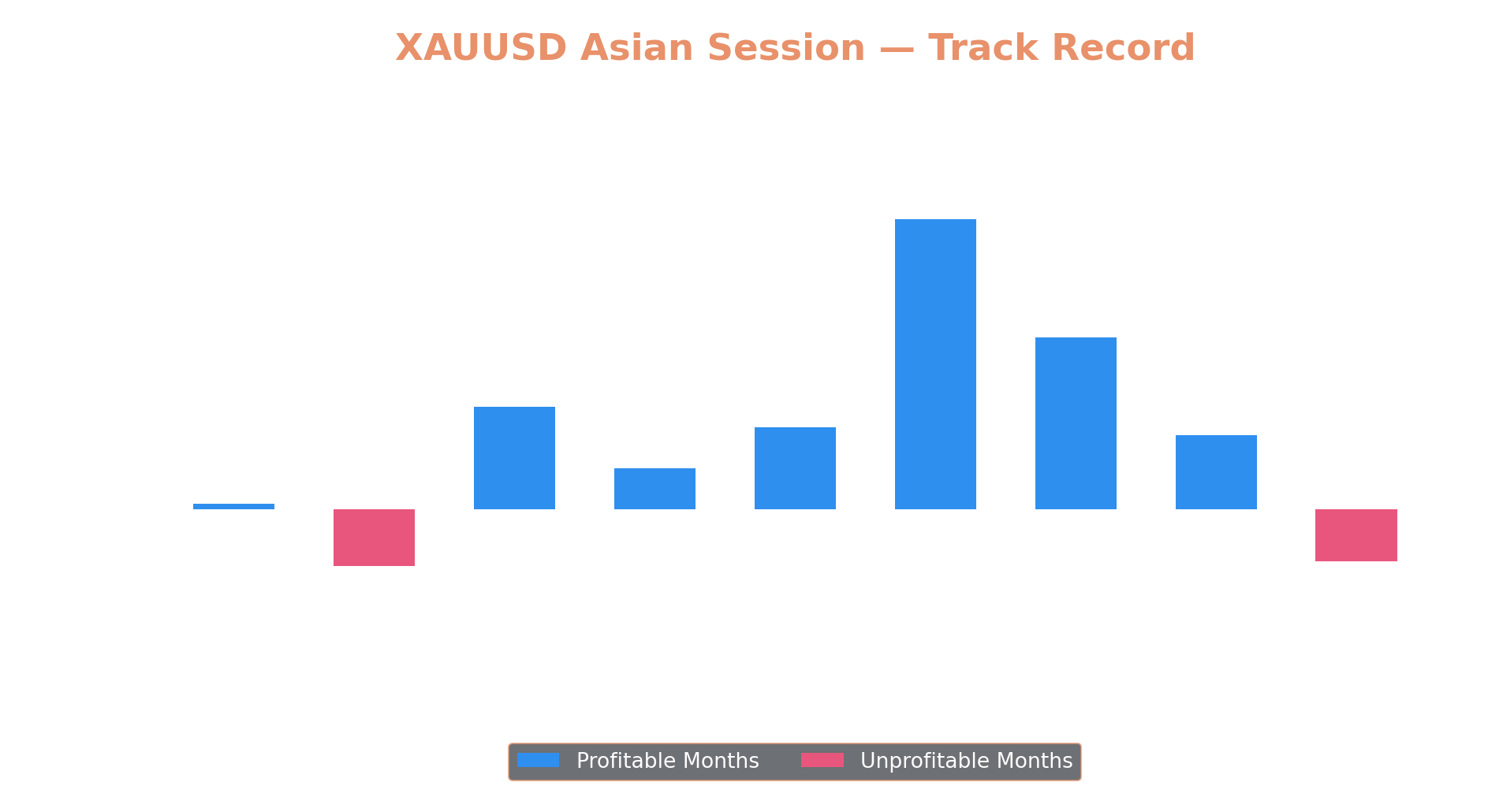
XAUUSD: Asian Session
November 2025 to July 2026
PeregrinePips is an educational platform for traders who want structure, practical market knowledge and disciplined execution: not signals, brokerage services or promises of guaranteed returns.

Selected historical strategy results are displayed as educational material. They are not investment returns, guarantees or promises of future performance.
November 2025 to July 2026
2025 monthly results
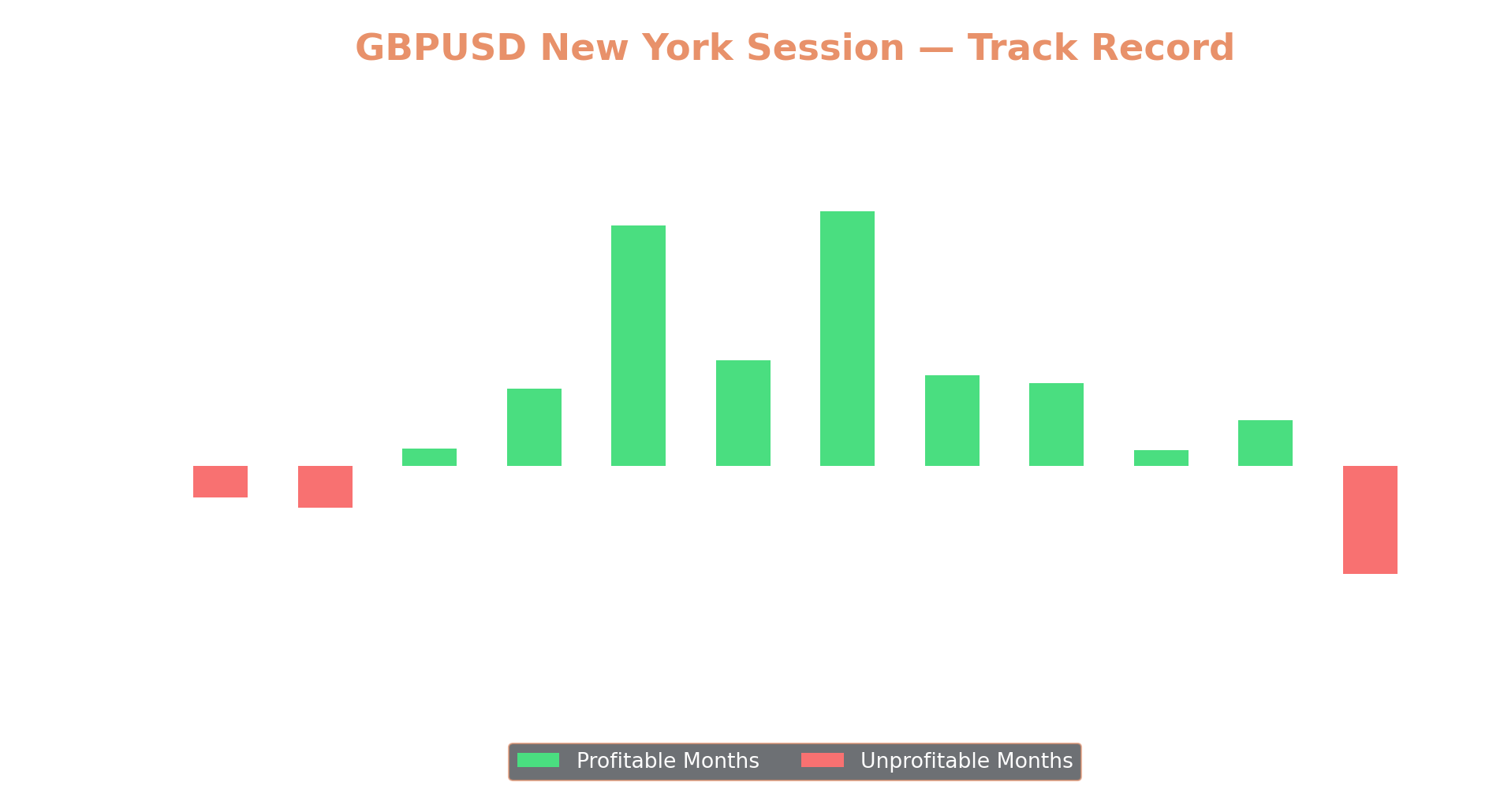
2025 monthly results
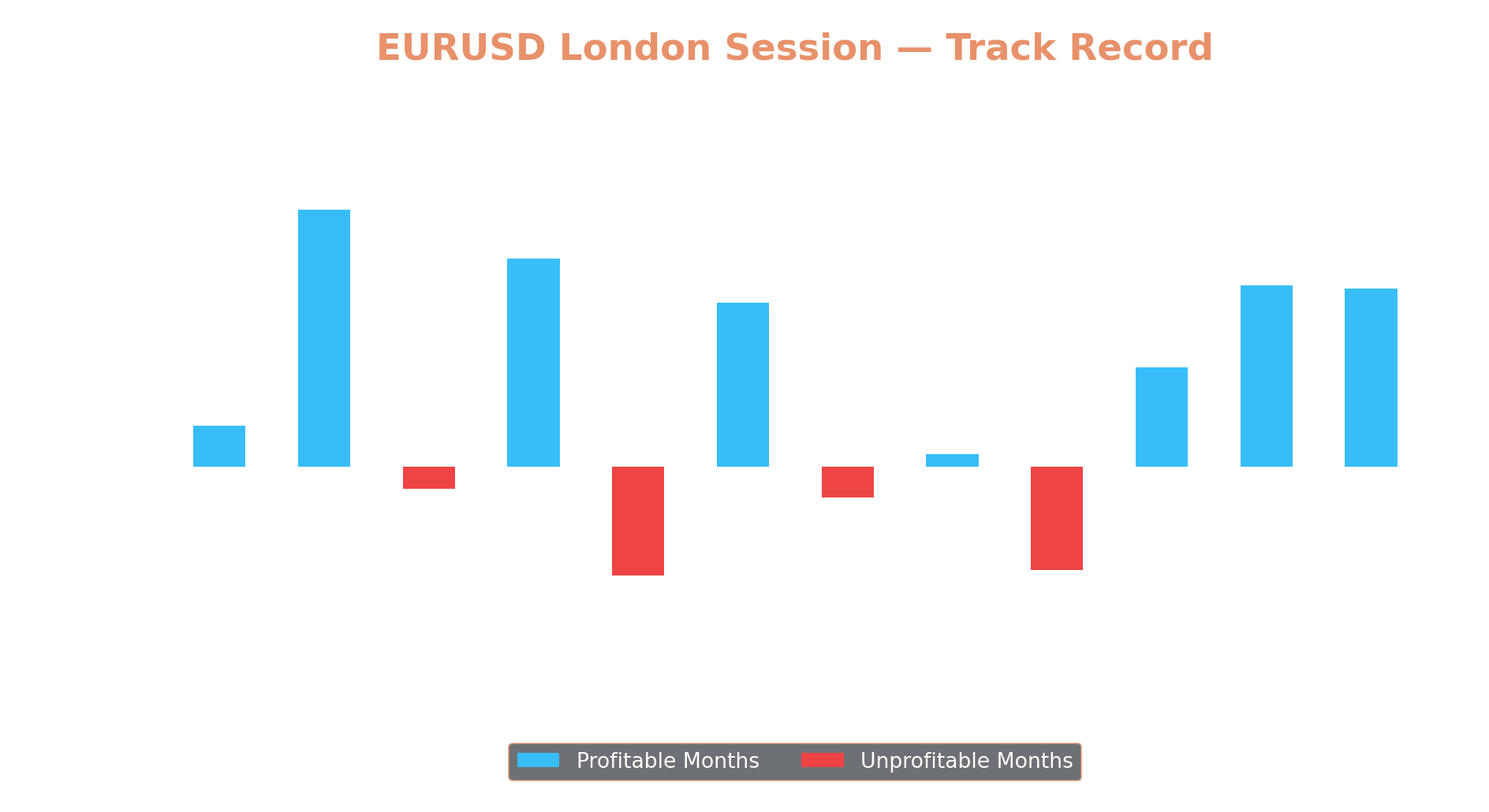
Past performance does not guarantee future results. Figures shown are supplied historical educational examples and should not be interpreted as financial advice.
The Free Forex Bootcamp is the same foundation every PeregrinePips student begins with: six weeks, twelve full lectures, no cost and no admission process. Work through it at your own pace; your progress is saved automatically on this device.
Overview. Price does not move in a straight line: it moves in swings, forming a repeating pattern of highs and lows that reveals the underlying trend. Learning to read this structure is the single most foundational skill in technical trading; entries, exits and risk placement are all built on top of it.
Key concepts:
Why it matters. Every strategy taught later in this bootcamp assumes you can already identify trend direction and structure shifts without hesitation. Practising this on historical charts, without placing a single trade, is the fastest way to build real chart-reading instinct.
Practice exercise. Open any major pair on a daily chart, mark the last ten swing highs and swing lows, and label whether the market is trending, ranging, or transitioning.
Overview. Support and resistance are the price levels where buying or selling pressure has historically been strong enough to pause or reverse a move. They are not exact lines but zones, and knowing how to draw them correctly prevents a huge amount of confusion later.
Key concepts:
Why it matters. Every entry and exit method taught in this course references a level. If your levels are drawn incorrectly, everything downstream, including risk management, becomes unreliable.
Practice exercise. Mark five key levels on your chosen pair's weekly chart, then check how price has reacted at each one over the past twelve months.
Overview. Retail traders place stop-losses in predictable places: just above recent highs, just below recent lows. Larger market participants know this, and price is frequently drawn toward these clusters of orders before reversing. Understanding this reframes "random" wicks as deliberate, explainable price behaviour.
Key concepts:
Why it matters. Recognising liquidity grabs stops you from being shaken out of good positions, and helps you avoid entering right before an "obvious" level gets swept.
Practice exercise. Find three recent examples on your chart where price broke a swing high or low by a small margin and immediately reversed.
Overview. This lecture introduces how large participants build and exit positions gradually, rather than in a single transaction, and why that creates the specific candle patterns studied later in the course.
Key concepts:
Why it matters. Order flow concepts explain why price sometimes appears to "return" to a level for no visible reason: it is often revisiting an imbalance left behind by a fast move.
Practice exercise. Identify one displacement candle on your chart and mark the imbalance it left behind; watch whether price returns to it before continuing.
Overview. A candlestick's shape only becomes meaningful in context. This lecture teaches you to read candles at the locations that matter: key levels and liquidity zones: rather than in isolation.
Key concepts:
Why it matters. This is where structure, levels and liquidity come together into an actual read on what is happening right now, in real time, on your chart.
Practice exercise. Screenshot five candles that formed directly at a key level and write one sentence explaining what each one suggests about buyer/seller control.
Overview. This lecture combines Lectures 3 and 5 into a practical entry framework: waiting for liquidity to be taken at a level, then reading the candle response, before considering an entry.
Key concepts:
Why it matters. This lecture marks the transition from "reading" the market to structuring an actual, repeatable entry method around what you have learned so far.
Practice exercise. Paper-trade (no real money) the next three liquidity sweeps you see on your chart and record the outcome of each.
Overview. This is arguably the most important lecture in the entire bootcamp. No strategy survives inconsistent or oversized position sizing, regardless of how accurate the analysis behind it is.
Key concepts:
Why it matters. Every concept taught in Weeks 1 to 3 only has value if the account is still funded long enough to apply it consistently.
Practice exercise. Calculate the correct position size for your account, for a 1% risk trade, at three different stop-loss distances.
Overview. Beyond individual position sizing, this lecture covers the broader rules that keep a trading account and a trader's decision-making stable over time.
Key concepts:
Why it matters. Most avoidable account losses come from abandoning a reasonable rule in the moment, not from a flawed strategy.
Practice exercise. Write your own one-page risk framework: maximum risk per trade, daily loss limit, and a correlation rule: before your next live trade.
Overview. Losing trades are not failures: they are an expected cost of doing business in a probabilistic activity. This lecture reframes how to interpret a loss.
Key concepts:
Why it matters. A trader who cannot separate outcome from process will eventually abandon a good strategy after a completely normal losing streak.
Practice exercise. After your next loss, write down whether it was a "good loss" or a mistake, and why, before doing anything else.
Overview. This lecture focuses on the practical habits that keep decision-making consistent when a live position is open and emotions are at their highest.
Key concepts:
Why it matters. Strategy determines what a good trade looks like; discipline determines whether you actually take it the way it was planned.
Practice exercise. Build a five-point pre-trade checklist and use it, unmodified, for your next ten trades.
Overview. A trade journal is only useful if it is reviewed with structure. This lecture teaches a repeatable review process that turns every trade: win or lose: into a learning input.
Key concepts:
Why it matters. Traders who review structurally improve measurably faster than traders who rely on memory and instinct alone.
Practice exercise. Build a simple trade journal template: setup, reasoning, risk, outcome, screenshot: and log your next five trades in it.
Overview. The bootcamp closes by bringing every concept together in real time: watching the market live, narrating structure, levels and liquidity as they unfold, without placing a trade.
Key concepts:
Why it matters. Markets move differently live than they appear in hindsight on a clean historical chart. Building this observation habit early prevents a common gap between "chart theory" and real execution.
Practice exercise. Spend one full session (30 to 60 minutes) watching a live chart and writing real-time commentary, without placing any trade.

Join our free Telegram community for daily market updates, weekly outlooks, and selected free setups.
Join Telegram Channel (@Tradezm)
New to trading? Master pips, lot sizes, order types, market structure, and margin requirements through our visual slide viewer.
Launch Visual Slides ↗A structured learning path designed to move students from understanding market behaviour to developing a repeatable trading process.
Six progressive stages designed to develop independent technical execution from the ground up.
Understand how price behaves and how directional structure develops.
Study liquidity pools, order flow dynamics and large participant mechanics.
Identify meaningful liquidity sweeps and high-probability entry zones.
Protect capital and build mathematical consistency through strict sizing.
Develop disciplined patience, emotional neutrality and execution grit.
Learn through real-time market observation, trade breakdowns and direct feedback.
Education, transparency and strict execution discipline over speculative hype.
We do not position PeregrinePips as a brokerage or investment service. The platform exists exclusively to educate traders and cultivate independent, lifelong market-analysis autonomy.
Never take a position without thorough structural context and defined risk invalidation.
Mastering consistent execution mechanics mathematically produces long-term performance.
Preserve capital through drawdowns before ever increasing lot size or leverage.
Educational transparency: There are no guaranteed profits and no claims that every student will achieve a particular outcome. Risk management is non-negotiable.
Engineered for serious individuals seeking genuine market competency.
Traders seeking a clear, disciplined foundation without commercial marketing noise.
Traders with basic knowledge who need a systematic, objective, non-emotional process.
Seasoned participants looking to refine execution precision, order flow and liquidity edge.
Individuals balancing trading education with full-time careers or family commitments.
Traders exhausted by signal dependency, chatroom hype and unrealistic get-rich illusions.
Analysis, planning, execution and review stay connected throughout the learning process.

A framework for making decisions independently rather than depending on someone else to tell them when to buy or sell.
A private learning environment focused on education, discussion, feedback and accountability.
The goal is not to create followers. It is to help students develop enough understanding to analyse markets, formulate a plan and make their own decisions.
“We do not create traders who wait for calls. We build traders who understand why.”
: PeregrinePips
Membership pricing is not public by default. Complete the short readiness questionnaire below: it takes about 60 seconds: and pricing unlocks immediately once you are done.
Your name or preferred alias for our records.
Three ways to enroll once the readiness questionnaire is complete. Longer terms carry prioritized mentorship slots.
Membership pricing unlocks once you complete the readiness questionnaire above.
Start the QuestionnaireNo. PeregrinePips is presented as an educational and mentorship platform. It does not execute trades, hold client funds or act as a brokerage.
No. Trading involves substantial risk and no educational programme can guarantee profits or a particular level of performance.
Yes. The curriculum is designed to provide a structured path from foundational concepts toward more advanced market analysis and execution.
The platform is designed around education and independent decision-making rather than creating dependence on signals.
The educational structure can be followed around a normal work schedule, although the time required depends on the student\'s goals and pace.
For admissions, community information or general enquiries, use the channels below.
@TochiNelson4: direct updates, market analysis and founder commentary.
@Tradezm: private community access, public outlooks and announcements.
@peregrinepips: video breakdowns, market webinars and strategy tutorials.
Peregrinepips@gmail.com: direct enrollment and admissions support.